Article
Post-Acquisition Customer Data: Who Is Actually the Same Customer?
Nx Growth Partners5 min read
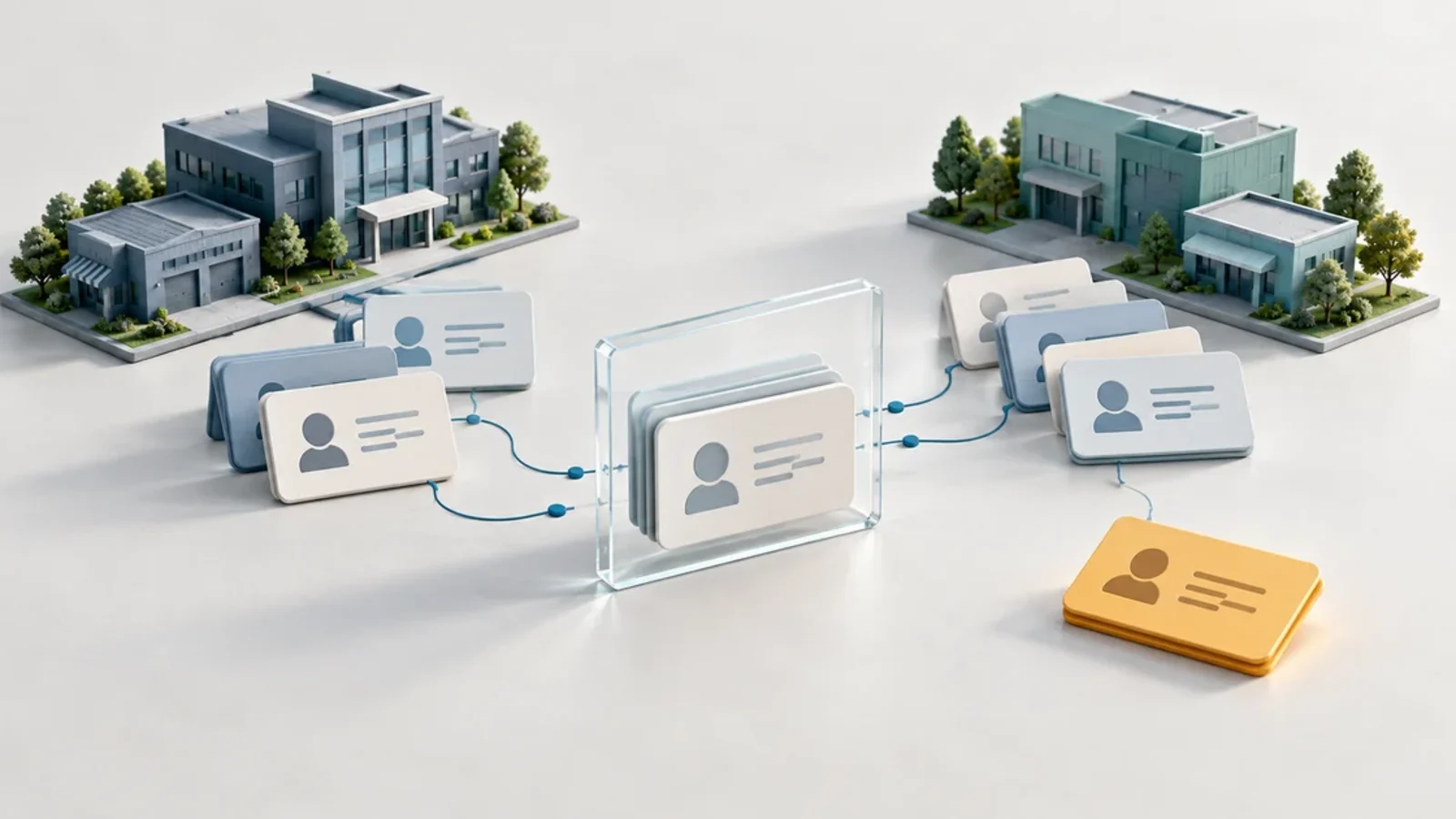
Post-acquisition customer data integration should create a reliable map between the customer records in each business, while preserving the billing accounts, contracts, and service locations those records represent. Start with a shared customer view that leaves source records intact. Change operational records only after finance and account owners have agreed which relationships belong together.
For a private-equity operating partner or the CFO of a growing service group, this answers a concrete question: which customers already buy from both businesses, and which only look alike? That distinction matters before planning cross-selling, reviewing customer concentration, or consolidating billing.
Why does the same customer appear under several names?
An acquisition brings together systems built for different jobs. A CRM account may represent a buying relationship. A finance account may identify the entity receiving an invoice. A field-service record may represent one building. Treating all three as interchangeable creates misleading customer counts and broken handoffs.
Dun & Bradstreet’s M&A master-data guidance distinguishes moving data between systems from aligning the businesses and relationships it represents. Connecting two applications does not settle what either business means by “customer.”
Consider a hypothetical commercial HVAC group acquiring a plumbing business. Both serve buildings managed by the same property manager. One system lists the management company, another lists building ownership entities, and both contain separate service addresses. A shared office address or email domain is evidence of a relationship, not proof that every account should become one billing customer.
The group needs to see the commercial relationship across both businesses without erasing the separate entities, locations, and invoice instructions underneath it. This is a planning example, not a description of an NxGP engagement.
What should the first customer integration deliver?
Ask for a customer crosswalk: a maintained mapping from each original system and account ID to an agreed customer identity. Keep the original identifiers available so a user can trace every relationship back to its source. The first useful deliverable is a view that explains its matches.
Separate levels: distinguish the customer group, contracting entity, billing account, and service location. Allow relationships between them without treating them as duplicates.
Visible evidence: show the attributes supporting a proposed match, conflicting information, and the person responsible for resolving it.
Field ownership: decide which system controls each field. Finance may own billing instructions while operations owns service-location details.
Continuing updates: define what happens when either business creates an account, changes an address, or corrects an earlier match.
Do not make a broad ERP replacement a prerequisite for this first view. If the operating businesses must retain their systems, the mapping can sit alongside them and feed an approved reporting destination. Scope access by role and use only the data required for that purpose.
Where does AI help with customer matching?
Start with reliable identifiers and explicit rules. Normalize ordinary formatting differences before adding more complex matching. Microsoft’s business-account unification documentation separates duplicate detection within a source from matching accounts across sources. These are distinct jobs, with configurable rules.
AI-assisted matching is worth evaluating where abbreviations, trading names, or inconsistent descriptions make rules insufficient. Require it to propose candidate links and show supporting evidence. A confident explanation is not verification of ownership, contracting identity, or billing authority.
Define the acceptable decisions before testing: link automatically under agreed evidence rules, route for review, or leave unresolved. Judge results against examples labeled by people who understand the accounts. Measure wrong matches and missed matches separately. A system that merges unrelated accounts aggressively may produce a tidy list while making the business view less trustworthy.
Can existing software handle this, or is custom work justified?
Check the CRM, customer-data, and master-data capabilities you already license. A product may already provide matching, field-selection rules, and review tools. Ask for a demonstration using your account structures, rather than buying another platform from a feature list.
Custom integration becomes relevant when the product handles matching but cannot collect the required source records, preserve the relationship levels, or deliver approved identities to the operational workflow. The project may be a connector and review screen around an existing tool, rather than a new master-data platform.
When comparing a software development company or AI development partner, ask who owns the matching rules, how corrections propagate, and who supports each connection after launch. Request separate estimates for source access, data preparation, account mapping, review workflow, and ongoing support. Record count alone is a weak basis for pricing a project with several conflicting account models.
What should a partner prove before rollout?
Use a small, representative set of real accounts under appropriate access controls. Include both obvious matches and deliberately difficult cases:
Same customer, different names: show why two records belong together and retain both original account IDs.
Same address, different entities: keep separate billing customers separate while representing any confirmed group relationship.
One customer, several sites: show the combined commercial view without losing location-level service history.
Wrong match discovered later: split the relationship and identify which downstream views need correction.
New account after launch: demonstrate how it enters the process and who handles an unresolved candidate.
Compare invoice totals before and after mapping over the same scope and period. Changing customer identity should not duplicate or drop transactions. Also inspect account counts at each relationship level, unresolved records, reviewer effort, and known wrong or missed matches.
Plan for identities to change. Microsoft documents that unified profiles can merge or split when source data or matching rules change. Ask any proposed solution how it keeps those changes understandable to downstream users.
What is a useful first scope after an add-on acquisition?
Choose one operating group, two source systems, and one decision, such as identifying shared commercial customers for account planning. Agree the relationship levels, source owners, review responsibilities, and acceptance examples before commissioning a wider rollout. Keep billing changes outside that first scope unless explicitly required and tested.
For the broader reporting-platform decision, see our private-equity portfolio monitoring guide. Customer identity is a narrower problem that needs its own evidence and ownership.
NxGP provides custom software, workflow automation, and system integrations. If customer records from an acquisition are blocking a specific operating decision, discuss the workflow with us. Start with the systems involved and an anonymized example of two accounts your team cannot confidently connect.